The Key Muscles Of Hatha Yoga Ebook Torrent
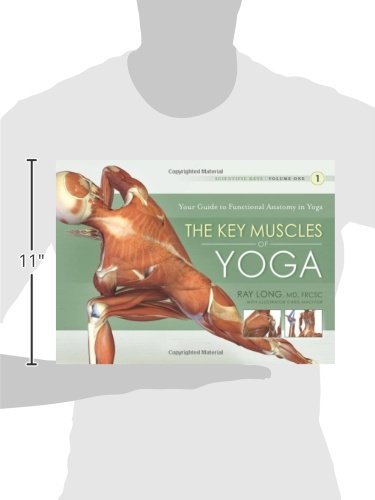
Through colorful, three-dimensional illustrations of major muscles, tendons, and ligaments, Ray Long describes the practice and benefits of hatha yoga. Specific anatomical and physiological descriptions highlight the agonist, antagonist, and synergist muscles that come into play with each pose. Volume I of the series describes the key. The Key Muscles of Yoga by Ray Long Ebook PDF Click Author: Ray Long Publish: 2009-08-01 This book offers a scientific approach to. yoga. Download The Key Muscles of Hatha Yoga by Ray Long, Chris Macivor 2006 Pdf Book ePub. This is the third edition of The Key Muscles of Hatha Yoga, with extended contents. This book offers a scientific approach to understanding the practice of hatha yoga. Through four-colour, three-dimensional illustrations of major muscles, tendons, and ligaments, Ray Long describes the practice and benefits of hatha yoga. Specific anatomical and physiological descriptions highlight the agonist, antagonist, and.
Key Muscles Of Yoga Pdf
The figures on these pages use the supraspinatus and hamstring muscles to illustrate this concept. Here Garudasana (Eagle Pose) illustrates moving the origin or insertion of the supraspinatus muscle in the shoulder to create length. Figure 1: The pectoralis major draws the humerus towards the midline of the body. This action moves the insertion of the supraspinatus muscle on the head of the humerus away from its origin on the body of the scapula. Figure 2: The rhomboids draw the body of the scapula towards the spine in the midline of the back. This action moves the origin of the supraspinatus muscle away from its insertion on the head of the humerus. Several structures are affected when a muscle lengthens, including the connective tissue elements that ensheath the muscle and the contractile elements that cause it to contract.
Musculoskeletal biomechanics describe this process. Three factors determine movement about a given joint: The bone shape The capsuloligamentous structures The muscles that surround the joint The shape of the bones forming a joint contributes to determining its range of motion. A deep ball and socket joint, such as the hip, has limited movement in three planes and the stability to bear the body weight. A shallower ball and socket joint such as the shoulder has greater mobility than the hip, but far less stability ( Figure 2). The capsule and ligaments surrounding the joints are known as the capsuloligamentous structures. The joint capsule and ligaments are comprised of fibrous connective tissue. Capsuloligamentous structures fasten bones to one another and also contribute to determining joint mobility and stability.
Figure 1: Bending the knee releases the origin of the main calf muscle, the gastrocnemius. This allows its insertion on the heel bone to move freely.
Colorful and comprehensive, 'Hatha Yoga Illustrated' is organized for your ultimate convenience and use. Use it to guide your muscles, as well as your mind, and increase strength and stamina, reduce stress and anxiety, reduce blood pressure, and increase flexibility.
Hatha Yoga Poses
The publisher, author, editor, illustrator, and distributor all make no representations or warranties with regards to the completeness or accuracy of this website, any linked websites, books, DVDs, or other products represented herein.
This book offers a scientific approach to understanding the practice of hatha yoga. Through four-color, three-dimensional illustrations of major muscles, tendons, and ligaments, Ray Long describes the practice and benefits of hatha yoga. Specific anatomical and physiological descriptions highlight the agonist, antagonist, and synergist muscles that come into play with each pose. Volume II of the series illustrates the correct muscle use during key poses of hatha yoga. From beginners to experts, this book will become a constant companion. Release info: The.Key.Poses.of.Yoga.Scientific.Keys.Volume.II Year: (2018) Langue: English Section: Book Uploader: Moonshine Size: 25 MB Added: 2 months ago.
The Key Muscles Of Hatha Yoga By Ray Long
Description This book offers a scientific approach to understanding the practice of hatha yoga. Through four-color, three-dimensional illustrations of major muscles, tendons, and ligaments, Ray Long describes the practice and benefits of hatha yoga. Specific anatomical and physiological descriptions highlight the agonist, antagonist, and synergist muscles that come into play with each pose. Volume II of the series illustrates the correct muscle use during key poses of hatha yoga.
This is the third edition of The Key Muscles of Hatha Yoga, with extended contents. There is a new cover, over 50 new pages with an expanded chapter on the breath and more biomechanics in yoga. 244 page book with over 650 colour 3D computer generated images of a human skeleton covering over thirty key muscles as applied to Hatha Yoga including biomechanics and information This is the third edition of The Key Muscles of Hatha Yoga, with extended contents. There is a new cover, over 50 new pages with an expanded chapter on the breath and more biomechanics in yoga. 244 page book with over 650 colour 3D computer generated images of a human skeleton covering over thirty key muscles as applied to Hatha Yoga including biomechanics and information on the chakras.
Figure 2: Once the calf muscles are relaxed, bend the elbows to tilt the foot backwards and hold it in this position. This fixes the insertion of the calf muscles at a point further away from their origin on the femur. This is an example of connecting the upper and lower extremities to deepen a pose. Figure 3: The hands continue to grip the feet while the biceps and brachialis muscles remain active, bending the elbows and holding the foot in the tilted back (dorsiflexed) position. The quadriceps then straighten the knee. This action draws the origin of the calf muscles on the back of the knee away from their insertion on the heel, stretching these muscles. Figure 4-a: Bending the knee releases the insertion of the hamstring muscles on the lower leg.
I do think that this chapter could benefit from some revision as it could make the relations between concepts clearer, but content-wise everything's there. The funny thing is that what that first chapter lacks in terms of structure and relations is what makes the chapters on muscles so good: they are structure very clearly, which aids the learning process in many ways. 
This book offers a scientific approach to understanding the practice of hatha yoga. Through four-color, three-dimensional illustrations of major muscles, tendons, and ligaments, Ray Long describes the practice and benefits of hatha yoga. Specific anatomical and physiological descriptions highlight the agonist, antagonist, and synergist muscles that come into play with each pose. Volume I of the series describes the key muscles of hatha yoga and how they are utilized.
Since bone shape cannot be changed and ligament length should not be changed, we are left to work with the muscular stabilizers. This is a good thing. It simplifies matters because the length intention of skeletal muscles is under our conscious influence and can be safely affected by practicing Yoga to improve the body’s range of motion. What is Stretching? All skeletal muscles have an origin in one part of the skeleton and an insertion on another part. Stretching a muscle basically involves moving its origin and insertion farther apart. Muscles can be stretched by fixing their skeletal origin in place and moving the insertion, or vice versa (or a combination).
Practicing Yoga lengthens muscles surrounding multiple joints and increases the range of motion for the entire body. Limitations in the ability to perform a given Yoga pose can result from any of the factors determining joint mobility and stability, including the muscle’s contractile state, the length and/or tightness of the capsuloligamentous structures, and the bone shape—or a combination of these factors. Bone shape is permanent and cannot be changed once the growth plates are closed (during adolescence). While the shapes of bones vary from person to person, it is difficult to say that a particular individual’s bone shape is the limiting factor in their ability to perform a given Yoga pose. The state of the capsuloligamentous structures can also limit the ability to perform a Yoga pose. Furthermore, ligaments have a limited capacity to stretch without being damaged, potentially creating instability about the joint.
The psoas muscle then tilts the pelvis forward. This action moves the origin of the hamstrings at the back of the pelvis away from their insertion on the lower.
Connective tissues lengthen over time with consistent practice. The contractile elements (also known as myomeres) are under the control of the central nervous system. We focus on these elements in the section entitled Physiology of Stretching.
As I am trying to learn the anatomy, choosing more complicated poses for examples complicates those illustrations and makes them more difficult to follow. Also, I have not yet been able to master the pretzel pose, let alone think it needs more umph to it.
Figure 1: The biceps and brachialis muscles synergize to flex the elbow. Understanding biomechanical processes and interactions is one key to balancing the forces and energies throughout the body. Body biomechanics are under the mind’s conscious control. The brain controls the skeletal muscles that move the bones and joints, signaling the muscles to contract or relax and moving the body into the positions of Yoga. Each joint is surrounded by muscles that are grouped according to the movement they produce when contracting or relaxing. The agonist or prime mover muscles act to produce a given movement.